Are Genetically Modified Foods Harmful?

Those of us who were young when the Soviet Union fell apart remember the impression made by our first encounters with Western sweets, packed with the latest achievements of the capitalist chemical industry: “Turbo” and “Donald” chewing gum, “Yupi” and “Invite” instant drink powders, ice cream with fillings. Their taste was so concentrated, so utterly unfamiliar to the Soviet consumer, that our taste buds went off the scale with pleasure: “How can so many peaches fit into such a tiny amount of product?!” But very little time passed before all these goods turned, in the shoppers’ eyes, into cheap junk nobody wanted. With literally every new taste they lost more of their appeal, and by the 10th or 15th time they caused disgust rather than pleasure.
Why did this happen? Because our body has a mechanism for analysing the biological value of what we eat, and it shapes our taste preferences based on that data. To be more precise, it was exactly the inability to analyse a food perfectly at the level of the receptors that led humans to develop an associative system for recognising “useful” foods: what gets identified is not the substances themselves, but the combinations of taste markers that accompany them and the overall effect they have on the body. In essence, this is the only mechanism that for millions of years allowed humans to move freely into new habitats and switch to new kinds of food without the risk of dying out from poisoning. Almost every one of us has a special food stored in our memory that is tied to an unpleasant story of poisoning or overeating, so any taste associated with it makes us feel sick. Indeed, many potent substances — poisons and essential vitamins alike — have no effect on human receptors at all, and the only way evolution could ensure control over whether a food was fit to eat was by forming certain associations between the substances that do act on the receptors and the expected “tasteless” rest of the food’s composition. And in any case, no system of taste receptors, however perfect, could ever analyse absolutely every substance.
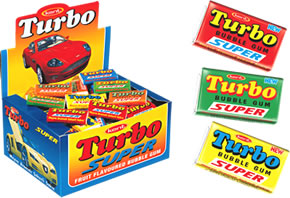
In the situation described at the start of this note, the body, used to associating certain tastes and smells with a specific set of substances that are good for it, was genuinely delighted at the first sip of drinks like Yupi: judging by the taste, it expected to get, in a single glass, as many vitamins and calories as ten pineapples contain. But “to its surprise”, several hours went by and neither the calories nor the nutrients arrived. With every new try, finding more and more differences between real pineapples and their flavour substitutes, the brain stripped these products of their halo of appeal ever more intensely, until the association turned into aversion.
If there are any repulsive or attractive tastes built into us genetically, they certainly make up only a small percentage of the acquired ones, and to assess the nuances of an unfamiliar food’s composition you have to eat it long enough to “outweigh” the associations formed earlier. Olives, for example, were something the same Soviet citizens experienced the other way round (I mean, of course, those who came to love them): almost everyone who tried them for the first time found them disgusting at first. By the look of them you expect something sweet, like a plum; the taste is the complete opposite, and the smell is something altogether unknown. But after just a few tries, despite the dislike, the body developed a certain “curiosity” — an unfounded urge to taste the thing once more. After 10 or more tries, the mere sight of olives brought on an appetite, accompanied by a pleasant sense of anticipation, and it showed itself as salivation — exactly the way Pavlov recorded it in his dogs. Of course, some people can’t stand olives, just as they can’t stand mould-ripened cheeses — perhaps because their composition doesn’t suit their body, or perhaps because they never got over that barrier of 10–15 tastings.
The next wave of intervention in our diet was genetically modified foods. We barely felt it, and that is exactly where their main danger lies. At the same time, this danger is not at all what everyone is trumpeting about, and the horror stories on this subject are, in my opinion, rather exaggerated. GMOs are harmful above all because the body cannot identify a food’s composition from its appearance and taste. It expects to get an apple and gets some kind of mandrake instead. Yet nothing prevents a genetically modified food from having a composition that is perfectly harmless to health, or even from being healthier than ordinary foods. In any case, the genie is out of the bottle, and I have no idea how this process could be stopped. The problem lies elsewhere: they change so quickly, while keeping the outward features of classic foods, that our bodies have no chance to figure out whether the substances they contain are any good for us. A modified apple can no longer be called an apple, because in fact it isn’t one. No laboratory can analyse a food’s composition as well as the body can, if only because different people are sensitive to different substances in different ways. So, in light of the above, I would like to put forward the following thesis:
The danger lies not so much in eating GMOs as in mixing them with other foods.
So I consider the widespread use of GMOs acceptable, and perhaps in many cases even beneficial, provided the following principles are observed:
- Give every genetic modification its own name, clearly distinct for the consumer: not “apple” but GMO-231 or the like, or at the very least something like “bapple” or “zapple”; forbid keeping the name of the prototype for the product. Then after N tastings everyone will know whether this product suits them.
- Allow only those GMOs that have won popularity and acceptance among a large part of the population to be added to products with mixed ingredients.
- Ideally, GMOs should have distinctive outward features — colour, smell — so that they are not confused with anything else.
- Make strictly sure that GMOs are grown in a completely isolated environment. This point, of course, is hardly feasible, but at least an effort should be made to prevent cross-pollination of plants grown from seed (rather than by grafting or vegetative propagation).
- Keep the seeds of the original plants under lock and key, so that guaranteed unmodified ones can be grown at any moment.
- And the last and most important one: to know whether a particular GMO is fit to eat, every person should have the chance to develop a stable bodily response to that food. Roughly speaking, if after the Nth time of eating it (provided no other GMOs with a similar taste were slipped into the diet during that period) the food gives a person an appetite, then most likely it does them no harm at all.
A bit off-topic: GMOs and business
GM foods earned their bad reputation largely because they are cheap. Using them as a more economical substitute for traditional foods has tainted the image of transgenic engineering with a whiff of the third-rate: “It’s beneath a respectable person to eat food like that. What, can’t I pay a few cents more to buy something without that muck?” says the consumer. But I am sure that if such goods were priced ten times higher than ordinary ones, attitudes towards them would change completely. People are happy to “gobble up stem cells” by the kilo and “drink the blood of babies” by the litre (which is the same thing), and pump their lips full of Botox, often only because it’s expensive and therefore prestigious. The classic marketing parable about the cigarette makers who beat their competitors not by lowering prices but by raising them could work for the products of transgenic engineering like nothing else.
The second factor that puts people off GMOs is their “diabolical origin”. I wrote about this effect in more detail in my note “Artificial Intelligence”, where I pointed out the link between how tragic the endings are in legends about encroaching on God’s prerogative — creating living beings — and the “spiritualising” element in those stories. Any fairy-tale or emotional element in a product’s image can turn attitudes towards it around 180° — from a devilish mutant weed to a magic flower — and perhaps finally let us taste them with an open mind.
The third remark concerns preserving, in their original form, those crops that easily cross with plants from neighbouring plantations. Over time, original varieties not mixed with transgenic ones may simply cease to exist. It seems to me that sealing away the seeds of certain plants could be a very valuable investment in the future of one’s descendants. Works of art, wine and collectibles tend to grow in value every year, while being far more reliable than banks. It may be that in the near future the need to eat food guaranteed to be untouched by the “scientific devil” will turn out to be no less weighty than the place of religious life in modern society. But this scheme needs a seal of impeccably pure seed origin, and in many ways time has already been lost, because samples sealed before transgenic engineering appeared will intuitively be trusted more than later ones.
In this note I wanted neither to campaign for eating transgenic foods nor, on the contrary, to brand them with horror stories, because I don’t even want to think about what we are no longer able to change. But what is entirely within our power is to stop mixing them chaotically with other foods, to give them clear names, and finally to taste them properly and find out what they really are. That’s why the dubious “GMO-free” label appeals to me far less than an honest statement of a variety that may be man-made, but is tested. In this sense, a strategy of tolerance towards these foods would be more effective.